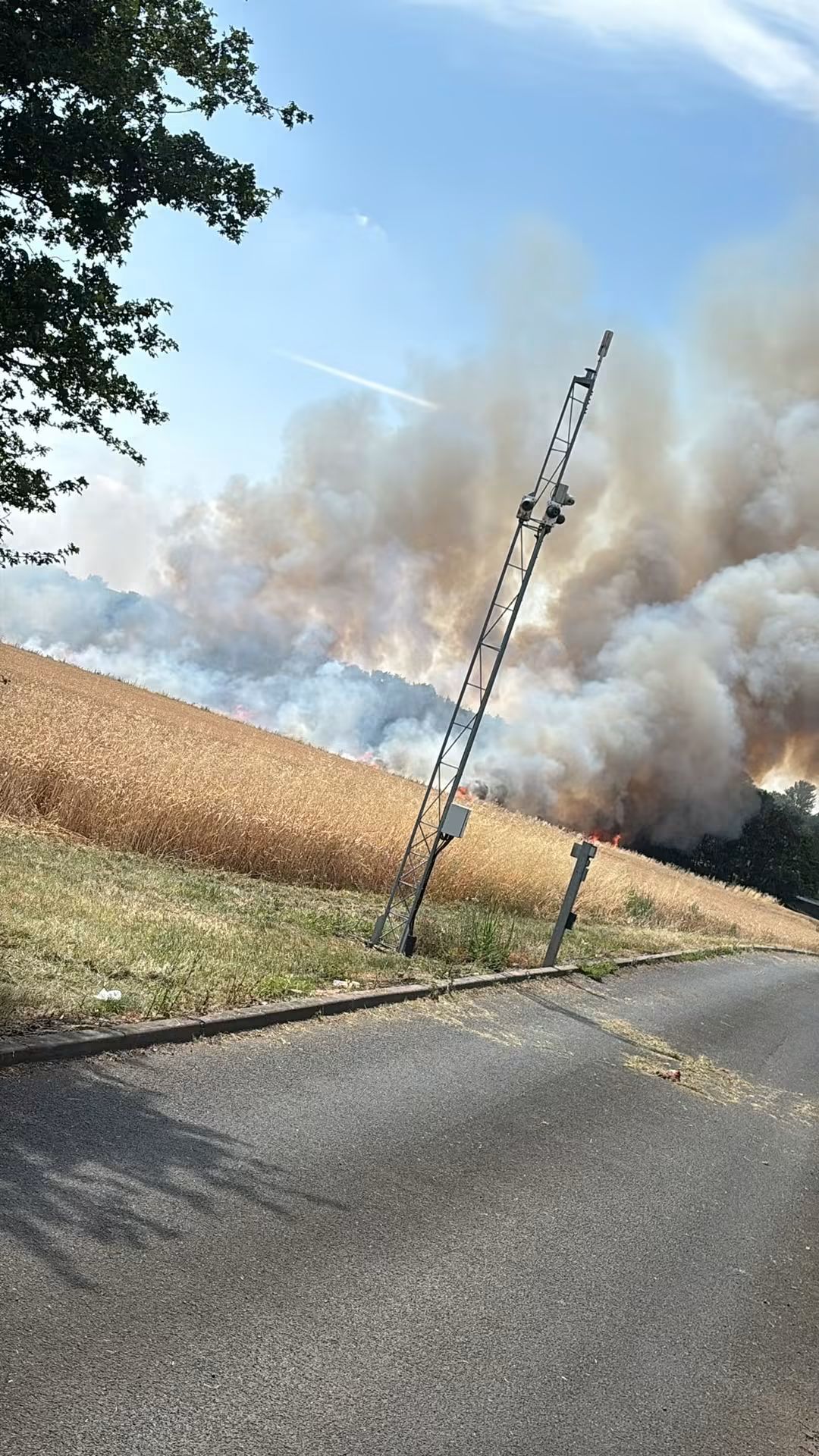
Reducing the risk of standing crop fires
During hot weather there is an increased risk in relation to standing crop fires which farmers need to be aware of.
Standing crop fires can spread rapidly during hot, dry, and windy conditions, causing significant losses to crops, machinery, wildlife, and neighbouring properties. A proactive approach can greatly reduce the risk of fire starting and spreading.
Key risk factors
- Dry crops and vegetation.
- High temperatures and low humidity.
- Strong winds.
- Machinery operating in dusty conditions.
- Vehicle exhausts and hot components.
-
Discarded cigarettes, naked flames, and controlled burns.
Before Harvest
Prepare Machinery
- Inspect combines, tractors, balers, and telehandlers daily.
- Check bearings, belts, brakes, and electrical systems for overheating or damage.
- Remove dust, chaff, and crop debris regularly.
-
Ensure exhaust systems and spark arrestors are functioning correctly.
Field Planning
- Create fire breaks where practical, particularly around field boundaries.
- Identify access points for emergency services.
-
Keep gateways and tracks clear.
During harvest
Monitor Conditions
- Be especially vigilant during hot, dry, and windy weather.
-
Consider delaying operations during periods of extreme fire risk.
Safe Working Practices
- Regularly stop machinery to clear accumulated chaff and dust.
- Do not park hot machinery in standing crops.
- Avoid refuelling while engines are running or hot.
-
Keep mobile phones available for emergencies.
Staff Awareness
- Ensure all operators know fire reporting procedures.
- Maintain communication between field teams.
-
Report smoke or signs of fire immediately.
If a fire starts
- Stop work immediately.
-
Call 999 and provide accurate location details using the What3Words app where possible.
- Move machinery to a safe area if possible without risk.
- Keep people clear of the affected area.
-
Meet and guide emergency services to the incident location.
Simple Daily Checklist
✅ Check machinery for dust, chaff, and defects
✅ Review weather and fire risk conditions
✅ Brief staff on emergency procedures
✅ Keep access routes clear
Regular machinery maintenance, good housekeeping, and staff awareness are the best defences against standing crop fires.